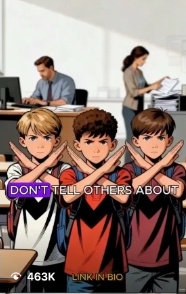
"Stranger danger" is broken advice. Most strangers are safe — and most real threats don't look like strangers. They look friendly, they know your child's name from a jersey, and they always, always ask for help or offer a shortcut.
Teach patterns, not villains
Kids can't screen people, but they can screen behavior. The formula to install: safe adults don't ask kids for help, don't offer secret gifts, and don't rush you. A lost puppy, free candy, "your mom sent me" — different costumes, same three tells: help request + reward + urgency.
The Voice Shield: one phrase, endless uses
When approached, the loaded script is: "No — I have to ask my parent first." Then immediately walk toward people, not away from them. Rehearse it in playful roleplay until it fires automatically. This phrase works on strangers, pushy relatives, and salespeople alike, because it's not rude — it's protocol. (We include printable Voice Shield Scripts in Volume 1.)
The trusted circle
Draw three rings with your child. Inner ring: 3–5 adults who can pick them up, know the family password, get told everything. Middle ring: known but limited (neighbors, coaches). Outer ring: everyone else — polite, public, no favors. When a situation is confusing, the question isn't "is this person nice?" but "which ring are they in?"
The family password
Simple and old-school for a reason: any adult claiming "your mom sent me" must know the password. No password, no pickup — walk to the nearest counter, teacher or parent with kids. Practice the scenario twice a year.
Online: the same three tells, new costume
Online predators and scammers use the identical formula — help/flattery + reward + urgency:
- "Free robux/skins — click fast, limited time!" → reward + urgency = trap.
- "You're so mature for your age. This is our secret." → flattery + secrecy = report immediately.
- "Send a pic / turn on your camera, everyone does it." → pressure + normalizing = block, tell, no shame.
Install the household rule that removes the predator's main weapon (shame): "You will never be in trouble for showing me something weird online. The person who made you feel weird is the one in trouble."
Emergency checklists beat lectures
Lost in a mall? Stop where you are → look for a worker at a register or a parent with kids → say the script. Home alone and someone knocks? Don't open, don't say you're alone, call the inner ring. Rehearsed checklists produce calm; lectures produce anxiety. Run one two-minute drill a month — kids treat them like games.
The confidence dividend
Here's what surprises parents: safety training done this way doesn't make kids fearful — it makes them bolder. A child with scripts, rings and passwords stops scanning the world anxiously, because the what-ifs already have answers.
Not sure where your kid stands?
Play our free 3-minute quiz together — 4 real-world scenarios, instant Street Smart Score, custom recommendation.
Take the free quiz →Found this useful? Share it with another parent: